pva knowledge
solubility of polyvinyl alcohol in water
Polyvinyl alcohol (PVA) is widely regarded as one of the few water-soluble vinyl polymers. Unlike most waterproof plastics, PVA is known for its unique water-solubility, which makes it indispensable in the packaging, adhesive, textile, pharmaceutical, and daily chemical industries.
Many users and manufacturers often ask: Is polyvinyl alcohol soluble in water? At what temperature does PVA dissolve? Why can’t some PVA completely dissolve in water? In this comprehensive guide, we will delve into the solubility of polyvinyl alcohol in water, including its dissolution mechanism, influencing factors, differences in solubility among different grades, and professional dissolution methods.
Is polyvinyl alcohol soluble in water?
Yes, PVA is soluble in water, but there are important precautions to be taken.
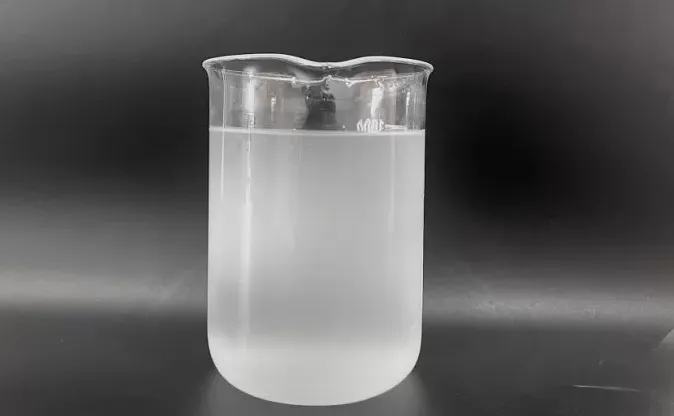
PVA is a water-soluble thermoplastic polymer that can dissolve to form a clear and viscous solution. However, the conditions required for dissolution vary depending on the PVA grade you are using. Some grades dissolve easily in cold water within minutes, while others require temperatures above 90°C and prolonged mixing.
PVA is almost insoluble in all organic solvents, including ethanol, acetone, benzene, and gasoline, which further proves that water is its only ideal solvent.
Chemical mechanism of PVA dissolution in water
To fully understand the solubility of polyvinyl alcohol in water, it is necessary to examine its internal chemical mechanism. The PVA molecular chain contains a large number of hydrophilic hydroxyl groups (-OH). When PVA powder or particles come into contact with water molecules, these hydroxyl groups will form hydrogen bonds with the water molecules.
As water molecules continuously infiltrate, the intermolecular forces between PVA polymer chains gradually weaken and eventually break. The polymer chains are continuously stretched and dispersed in water, ultimately forming a uniform, transparent, and viscous PVA aqueous solution. There will be no chemical reaction during the entire dissolution process, which is a physically reversible dissolution process. The dissolved PVA solution can reform a solid PVA film after water evaporation.
Key factors affecting the solubility of polyvinyl alcohol in water
The solubility of polyvinyl alcohol in water is mainly affected by the degree of hydrolysis, degree of polymerization, water temperature, particle size, and stirring speed. These factors directly determine whether PVA is completely dissolved and the quality of the final solution.
Hydrolysis degree (the most critical factor)
The degree of hydrolysis is the main factor determining the solubility of polyvinyl alcohol in water. Industrial PVA is divided into fully hydrolyzed and partially hydrolyzed types, with completely different solubility characteristics:
- Partially hydrolyzed PVA (87% -89% hydrolyzed): the best water-soluble PVA grade. It can dissolve stably in both cold and warm water (25-60 °C), with a rapid dissolution rate and few insoluble particles. It is the preferred grade for daily adhesives, detergent films, and low-temperature processing scenarios.
- Fully hydrolyzed PVA (98% -99% hydrolyzed): high crystallinity and strong intermolecular forces. It is insoluble in cold water and dissolves only completely in hot water above 90-95 °C. It has high solution viscosity and good water resistance after film formation, suitable for textile pulp and high-strength coatings.
Aggregation degree
The degree of polymerization determines the molecular chain length of PVA, affecting the dissolution rate and solution viscosity. PVA molecules with a low polymerization degree have short chains, a loose structure, and fast water solubility. PVA molecules with a high degree of polymerization have long chains and a tight structure, requiring longer heating and stirring times to fully dissolve, though their solutions exhibit higher viscosity and better film-forming properties.
Water temperature
Temperature is a necessary external condition for the dissolution of polyvinyl alcohol in water. Higher water temperature will accelerate the movement of water molecules, quickly breaking the intermolecular cohesion of PVA and accelerating dissolution. Low temperatures can cause slow dissolution, clumping, or incomplete dissolution, resulting in white, flocculent precipitates.
Particle size
The finer the particle size, the faster PVA dissolves.
Smaller particles have a higher surface area-to-volume ratio, allowing water to penetrate and hydrate polymers more quickly. The dissolution rate of powdered PVA is faster than that of sheet-like or granular PVA.
Mixing and Feeding Methods
Improper feeding is a common cause of PVA agglomeration. If PVA powder is poured into water too quickly without stirring, the surface of the powder will absorb water and immediately gel, wrapping the internal dry powder and forming hard blocks that are difficult to dissolve. Uniform stirring and slow feed dispersion can effectively prevent clumping and improve dissolution efficiency.
Standard dissolution parameters for common PVA grades
For industrial and laboratory reference, we have compiled the standard solubility parameters of mainstream PVA models, which intuitively reflect the solubility of polyvinyl alcohol in water:
- PVA 2488 (partially hydrolyzed): soluble in cold and warm water, optimal dissolution temperature 40-60 ° C, fast dissolution, transparent solution.
- PVA 1788 (partially hydrolyzed): Excellent low-temperature solubility, widely used in the production of water-soluble films.
- PVA 1799 (completely hydrolyzed): insoluble in cold water, only completely dissolved in 95 ° C hot water, high viscosity solution.
- PVA 2099 (completely hydrolyzed): high crystallinity, requires prolonged high-temperature heating to fully dissolve.
Professional step-by-step PVA water-soluble method
To maximize the solubility of polyvinyl alcohol in water and obtain a uniform, impurity-free solution, please follow the standard industrial dissolution process:
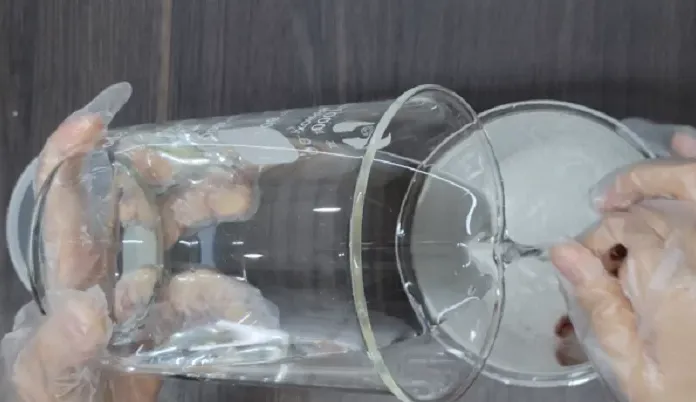
Step 1: Add clean water to the reaction tank and start stirring (stirring speed controlled at 300-500rpm to prevent static water from clumping).
Step 2: Slowly add PVA powder or particles to water, dispersing them to avoid dumping them all at once.
Step 3: Gradually increase the temperature. For 88 series partially hydrolyzed PVA, heat to 50-60 ° C and stir for 30-40 minutes. For 99 series fully hydrolyzed PVA, heat to 90-95 °C and maintain constant temperature, stirring for 60-90 minutes.
Step 4: Cooling and defoaming. After complete dissolution, turn off heating and continue stirring until room temperature. Let it settle and defoam to obtain a highly transparent PVA aqueous solution.
Common problems and solutions regarding PVA water solubility
PVA clumps in water
Reason: Fast feeding speed, no stirring, low water temperature. Solution: Stir and slowly add the material first. Preheat the water to 30-40 °C before adding PVA powder.
Presence of white insoluble particles in the solution
Reason: Insufficient heating temperature or short holding time. Solution: Continue heating to the rated temperature and extend the stirring time.
PVA solution becomes turbid after cooling
Reason: PVA with a high hydrolysis degree is prone to recrystallization at low temperatures. Solution: Increase the dissolution temperature appropriately, or choose partially hydrolyzed PVA for low-temperature use.
Application scenarios based on PVA water solubility
The unique solubility of polyvinyl alcohol in water is the core reason for its wide application in green manufacturing:
- Water-soluble packaging film: Low-temperature soluble PVA dissolves quickly in water, with no plastic residue, and is widely used in laundry boxes and pesticide packaging;
- Environmentally friendly adhesive: Water-based PVA adhesive uses water as a solvent and does not contain volatile organic compounds (VOCs), making it safe and environmentally friendly;
- Textile sizing: High temperature soluble PVA that is completely hydrolyzed forms a tough film after water evaporation, improving yarn strength;
- Medical coating: A soluble PVA solution is used for pill coating, which is easy to dissolve and absorb in the human body.
FAQ
Q1: Can polyvinyl alcohol dissolve in cold water?
Only partially hydrolyzed PVA (87% -89% hydrolyzed) can dissolve in cold water. Fully hydrolyzed PVA cannot dissolve in cold water or only slightly expands in it, and requires hot water at high temperature to fully dissolve.
Q2: Will PVA dissolved in water evaporate with water?
No. PVA is a high-boiling polymer. When water evaporates, PVA remains and forms a transparent, solid film, which is the core principle of PVA film-forming technology.
Q3: Is the PVA water-soluble solution stable?
Fresh PVA aqueous solution is stable. However, low temperature and long-term storage can lead to slow recrystallization, resulting in cloudy solutions. Proper heating and stirring can restore uniformity.
Conclusion
The solubility of polyvinyl alcohol in water is a flexible, adjustable property, primarily influenced by the degree of hydrolysis and polymerization. Partially hydrolyzed PVA has excellent cold water solubility and is suitable for daily and low-temperature industrial use, while fully hydrolyzed PVA requires high-temperature dissolution and provides excellent film-forming strength and water resistance. Mastering the influencing factors and standard dissolution methods of PVA water solubility can effectively improve the production efficiency and product quality of various industries. As a green, water-soluble, and biodegradable polymer, PVA will continue to replace traditional plastics and expand its application scope in the global environmental protection industry.
If you are looking for suitable PVA products, please contact us!