
pva knowledge
Does PVA cause microplastics?
As global awareness of plastic pollution rises, many consumers, formulators and environmental researchers keep asking: Does PVA cause microplastics? Polyvinyl alcohol (PVA / PVOH) is a widely‑used synthetic water‑soluble polymer found in laundry pod films, water‑soluble packaging, textile sizing, coatings, adhesives and cosmetic products.
This article introduces the molecular level behavior of PVA in water, key differences between PVA grades, common misconceptions, and unresolved research issues.
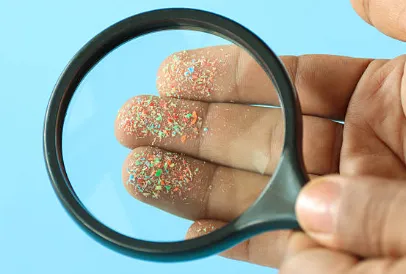
What Is The Official Definition Of Microplastics
According to ECHA (European Chemicals Agency), EU microplastics regulation (EU 2023/2055) and EPA guidance, microplastics are defined as solid, water‑insoluble synthetic polymer particles smaller than 5 mm. Core characteristics include physical fragmentation into solid fragments, water insolubility, persistence, and bioaccumulation in aquatic ecosystems.
A critical distinction: dissolving into individual polymer molecules is completely different from breaking into solid tiny particles. Conventional microplastics (PE, PP, PET, PS) stay as solid fragments in water. Water‑soluble PVA dissolves at the molecular level and loses solid particle form under proper conditions.
What Happens To PVA After Contact With Water
Highly water‑soluble PVA grades (typically partially‑hydrolyzed PVA 87‑89 %) go through a two‑stage transformation in aqueous environments:
1. Molecular dissolution: Hydroxyl groups on PVA molecular chains interact with water molecules. The solid PVA film disintegrates into freely dispersed individual polymer chains in solution; under ideal dissolution conditions, no solid micro‑scale fragments remain.
2. Biodegradation by specific microbes: In wastewater‑treatment‑plant activated‑sludge environments, specialized bacteria (Pseudomonas, Sphingomonas) produce PVA‑oxidase enzymes. PVA polymer chains are broken down step‑by‑step and finally mineralized into CO₂, water and non‑toxic biomass, instead of accumulating as plastic debris.
Important caveat: dissolution and biodegradation performance depend heavily on PVA grade, water temperature, retention time, and the microbial community. Fully‑hydrolyzed low‑solubility PVA grades behave differently from detergent‑grade soluble PVA.
Does PVA Create Microplastics? Grade Difference Is Critical
Detergent‑grade highly‑soluble PVA
This is the most‑discussed PVA variant. Under appropriate water‑temperature conditions, it fully dissolves into molecular chains and does not form solid microplastic particles. EU and EPA regulatory documents exclude water‑soluble biodegradable PVA from microplastic classification. That said, incomplete dissolution caused by cold‑water misuse or product defects may leave tiny solid residues in rare real‑world scenarios.
Less‑soluble/modified PVA grades
Biodegradation of PVA
- PVA biodegradation relies heavily on PVA‑degrading microbial populations. Some wastewater plants lack sufficient specialized bacteria, leading to incomplete degradation.
- Short hydraulic retention times in many municipal WWTPs cannot support full mineralization of PVA polymer chains.
- Partially‑degraded PVA may enter sludge. The environmental fate of residual PVA in biosolids still requires further systematic research.
Current consensus: properly‑dissolved high‑solubility PVA does not produce classic solid microplastics.
Common Misconceptions About PVA and Microplastics
Misconception 1: Since PVA is synthetic plastic, it must create microplastics
Misconception 2: Water‑soluble means 100 % disappears in any real‑world environment
Misconception 3: All PVA products behave identically
PVA VS Typical Microplastic: Core Comparison Table
| Property | High‑solubility detergent‑grade PVA | Conventional microplastics (PE / PP / PET) |
| State in water | Dissolves into molecular chains (ideal conditions) | Remains solid insoluble fragments |
| Degradation pathway | Enzymatic biodegradation, mineralizes to CO₂ and water (microbe‑dependent) | Slow physical fragmentation, extremely hard to mineralize |
| Fit regulatory microplastic definition | Excluded by EU / EPA for soluble biodegradable grades | Classified as microplastic |
| Bio‑accumulation risk | Low under full dissolution | High, accumulates in food chain |
| Key limiting factor | Temperature, microbial population, PVA grade | Chemical structural persistence |
FAQ
Q1: Does PVA cause microplastics?
High‑solubility detergent‑grade PVA does not generate solid microplastic particles under ideal full‑dissolution conditions, and is excluded from official EU and EPA microplastic definitions. However, low‑solubility / cross‑linked PVA may produce micro‑sized solid fragments upon mechanical breakage. Real‑world incomplete dissolution and imperfect wastewater degradation still raise open environmental‑research questions.
Q2: Are laundry‑pod PVA films microplastics?
Laundry‑pod‑film PVA is partially‑hydrolyzed high‑solubility PVA. When dissolved properly in warm washing water, it breaks down to molecular chains instead of solid micro‑particles. Cold‑water washing may slow dissolution.
Q3: Does dissolved PVA turn into nanoplastics?
Nanoplastics also require solid‑particle form. Fully‑dissolved PVA exists as individual polymer molecules in solution rather than solid nano‑particles. Only incomplete‑dissolution residual solids could theoretically become tiny fragments.
Q4: Will PVA fully biodegrade in rivers and oceans?
Complete biodegradation needs specific PVA‑degrading microbes. Natural open water bodies usually lack sufficient target microbial populations, so PVA mineralization proceeds very slowly. Best degradation occurs inside well‑operated municipal wastewater‑treatment plants.
Conclusion
To sum up the core answer to “Does PVA cause microplastics?”It heavily depends on PVA grade and real‑world service‑end conditions. Highly‑soluble detergent‑grade PVA dissolves into individual molecular chains rather than forming solid microplastic particles under ideal warm‑water dissolution conditions and is excluded by major global microplastic regulatory frameworks. But this conclusion does not extend to all PVA variants: low‑solubility, cross‑linked, or fully hydrolyzed PVA may produce solid micro‑sized debris after physical fragmentation.
Even for high‑solubility PVA, complete biodegradation is not guaranteed everywhere in nature; it relies on wastewater‑treatment‑plant microbial activity. For material developers and brand owners, grade selection and end-of-life disposal scenarios must be considered to assess risk and make responsible sustainability statements accurately.