
pva knowledge
Is PVA Plastic Food Safe?
Consumers frequently ask: Is PVA plastic food safe? PVA is a synthetic water‑soluble polymer widely found in food‑contact films, supplement tablet coatings, edible packaging, and food‑processing auxiliary materials. Widespread confusion remains about whether PVA qualifies as a food‑safe plastic, what certifications it requires, what risks it poses, and what usage restrictions apply. This article explains food‑grade PVA safety, global regulatory standards, critical differences between industrial‑grade and food‑grade PVA, common misconceptions.
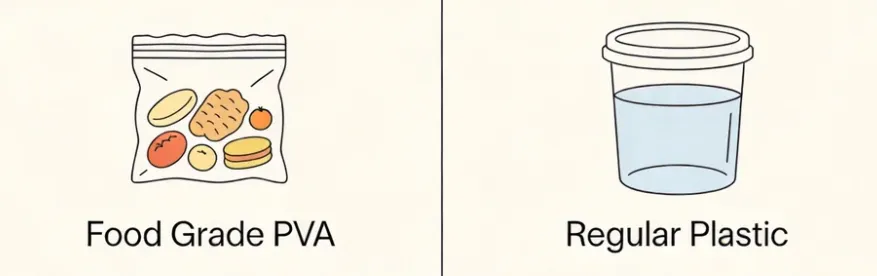
Food Grade PVA Is Safe For Approved Food‑Contact Scenarios
High‑purity, certified food‑grade PVA is safe for food‑contact applications within regulated usage limits. However, generic industrial‑grade PVA is NOT suitable for direct food contact, even though its base polymer molecule is identical. Safety depends entirely on material purity, residual impurities, compliance with migration limits, and following official usage conditions.
It is important to distinguish the PVA polymer backbone from harmful raw‑material residuals. Pure PVA polymer itself is non‑toxic. Potential hazards come from unremoved vinyl‑acetate monomer, methanol catalyst residues, or extra additives present in low‑quality industrial PVA products.
Global Regulatory Status of Food Grade PVA
Major global food‑safety authorities have evaluated and approved food‑grade polyvinyl alcohol for defined food‑contact uses:
- United States (FDA): PVA is listed under 21 CFR for indirect food‑contact materials. It also obtains GRAS status (GRN 1058) as a fruit‑and‑vegetable surface‑coating agent under strict dosage controls.
- European Union (EFSA): PVA is registered as food additive E1203, permitted for tablet and dietary‑supplement coatings. For plastic food-contact articles, it must comply with EU Regulation 10/2011 migration-limit requirements.
- JECFA / WHO: The Joint FAO/WHO expert committee has completed toxicology assessments for PVA used in food coatings and binders, setting safe usage ranges.
- China GB standard: PVA (vinyl‑alcohol homopolymer) is approved for food‑contact resin, with restrictions: mainly for dry‑solid and low‑fat food, maximum service temperature below 100 °C, and strict residual‑acetate migration limits.
These regulations emphasize that approval applies only to food‑grade PVA, not general industrial PVA for paint, adhesive, or textile sizing.
Key Differences: Food Grade PVA vs Industrial Grade PVA
| Item | Food Grade PVA | Industrial Grade PVA |
| Residual monomer | Strictly controlled low vinyl‑acetate residual | Higher residual monomers and catalyst impurities |
| Purification process | Multiple‑step washing, impurity removal | Basic synthesis, minimal post‑purification |
| Allowed application | Food‑contact films, tablet coatings, dry‑food packaging | Paints, adhesives, textile sizing, construction additives |
| Certification requirement | FDA / EU 10/2011 food‑contact test report | No food‑safety certification |
| Usage restriction | Must follow migration‑limit & temperature rules | Prohibited for direct food contact |
Approved Real‑World Food‑Safe Applications of PVA
Certified food‑grade PVA is commonly used in these food‑related scenarios:
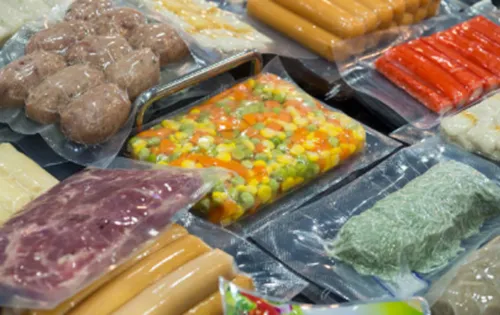
- Water‑soluble packaging films for dry food, spices, and dietary supplement ingredients;
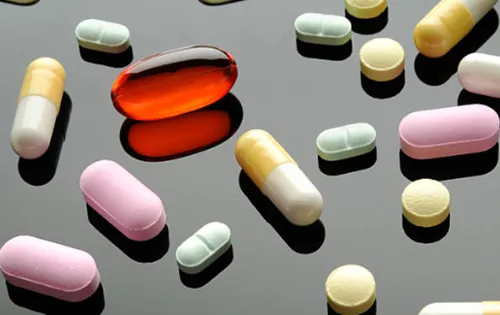
- Surface coating for vitamin and supplement tablets (E1203 film‑forming agent);
- Edible protective coatings for fruits and vegetables (GRAS‑listed usage);
- Auxiliary binder for confectionery and cereal products under limited dosage.
Important restrictions: Food‑grade PVA is water‑soluble. It is not recommended for long‑term contact with high‑moisture, high‑acid, high‑fat hot food above 100 °C. Under boiling‑water conditions, PVA film will dissolve, lose barrier performance, and may increase the risk of impurity migration.
Potential Safety Risks & Limitations
Even with food‑grade PVA, product developers must understand existing limitations:
- Risk 1: Confusing industrial‑grade for food‑grade material. Industrial PVA contains uncontrolled residual monomers and processing impurities. Using it for food contact will cause migration violations and health hazards.
- Risk 2: Improper service‑temperature conditions. Do not use PVA-based food-contact articles for microwave heating or boiling-water cooking. High temperature can accelerate substance migration and destroy PVA film integrity.
- Risk 3: Excessive oral intake. While PVA polymer itself has low acute toxicity, massive ingestion may trigger temporary gastrointestinal discomfort, bloating or obstruction. It is intended as a contact‑material or thin‑coating, not a bulk‑consumed food ingredient.
- Risk 4: Migration of residual impurities. Even food-grade PVA must pass overall-migration and specific-migration testing to meet EU 10/2011 and related food-contact standards before market launch.
Common Misconceptions About PVA Food Safety
Misconception 1: All PVA material is food‑safe
Misconception 2: Since PVA is a non‑toxic polymer, boiling‑hot‑food contact is fine
Misconception 3: PVA tableware (melamine‑ware) is made from PVA polymer
Misconception 4: Water‑soluble equals edible
Practical Tips for Formulators & Packaging Manufacturers
- Select certified food‑grade PVA only. Require supplier to provide food‑contact test reports (FDA 21‑CFR, EU 10/2011). Do not rely on “looks pure” visual judgment.
- Define end‑use scenarios clearly. Suitable for dry, room‑temperature food. Avoid microwaving, boiling, and long-term contact with high‑moisture or fatty hot food.
- Complete migration‑simulation testing. Even with qualified raw materials, finished articles need food‑simulant migration testing to verify compliance before mass production.
- Keep grade separation in inventory—store food-grade PVA and industrial-grade PVA separately to prevent cross-contamination in workshops.
- Marketing‑claim caution. Can state “compliant food‑grade PVA for dry‑food contact”, but avoid over‑claims such as “100 % edible plastic”.
FAQ
Q1: Is PVA plastic food safe?
Certified food‑grade PVA is safe under regulated food‑contact conditions. Generic industrial‑grade PVA is not safe for food‑contact applications. Use must follow temperature and food‑type restrictions set by global food‑safety authorities.
Q2: Can PVA film be used for microwave heating?
Generally not recommended. PVA is water‑soluble; microwave high temperatures will dissolve the film and increase impurity‑migration risk. Regulatory standards limit PVA food‑contact articles below 100 °C.
Q3: Is laundry‑pod PVA film food‑grade?
No. Laundry‑pod water‑soluble PVA belongs to industrial‑detergent‑grade material. It is not produced or tested for food‑contact compliance and must not be reused for food‑packaging purposes.
Q4: Is melamine tableware made of PVA?
No. Melamine‑ware uses melamine‑formaldehyde (MF) resin. PVA and melamine‑formaldehyde resin are totally different polymers; do not mix up their safety assessments.
Q5: Can I eat food‑grade PVA film?
Food‑grade PVA is permitted for thin‑surface‑coating trace‑exposure scenarios. It is not designed for bulk food use. Accidental tiny‑amount ingestion poses low risk, but intentional large‑volume eating is not advised.
Conclusion
To answer the core question “Is PVA plastic food safe?” safety is conditional. Certified high‑purity food‑grade PVA is approved for dry‑food packaging, supplement tablet coatings, fruit protective films and similar limited‑exposure food‑contact uses by FDA, EFSA and other global regulators. However, industrial‑grade PVA used for paints, glue and textile processing must never touch food.
PVA food‑contact material also has clear technical limits: avoid boiling‑water and microwave applications, mainly for dry‑food under 100 °C. Material developers must verify raw‑material certification and run finished‑product migration testing. Distinguishing food‑grade from industrial‑grade PVA, and respecting official usage restrictions, is the key to safe PVA food‑contact product design.