
pva knowledge
PVA Film Applications as a New Direction
In an era of heightened environmental awareness, the “white pollution” crisis caused by the non-degradability of traditional plastic packaging materials has become increasingly severe. Globally, over 300 million tons of plastic waste are generated annually, with only 9% being recycled and the remainder persisting in the environment for centuries.
Against this backdrop, PVA film is emerging as a transformative force in eco-friendly packaging, thanks to its unique biodegradability and exceptional functional properties. This water-soluble polymer, which fully degrades into carbon dioxide and water, is reshaping the ecological landscape of the packaging industry.
Analysis of PVA Film's Physical and Chemical Properties
Exceptional Properties from Molecular Structure
The molecular chains of PVA film consist of repeating vinyl alcohol units, with hydroxyl (-OH) groups forming a strong hydrogen bonding network that confers unique physical and chemical properties:
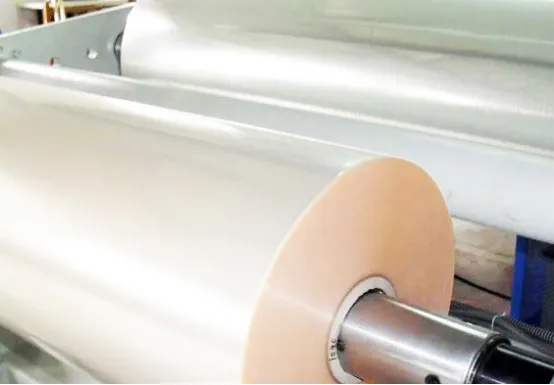
- High transparency: Over 90% light transmittance with haze below 1%, superior to conventional PET film;
- Superior gas barrier: 1,000 times better oxygen barrier than PE film, effectively extending food shelf life under dry conditions;
- Polar surface: Surface energy of 38-42 mN/m, providing 3× better adhesion with water-based inks compared to PE
Environmentally Responsive Functional Characteristics
PVA film’s dissolution behavior can be precisely controlled through molecular design:
- Temperature-gradient solubility: Room-temperature soluble (25°C), medium-temperature soluble (65°C), and high-temperature soluble (85°C) variants for diverse applications;
- Humidity responsiveness: 4.5% moisture absorption at 65% RH, enabling automatic microenvironment regulation in packaging;
- pH sensitivity: Smart packaging materials that dissolve at specific pH values through graft modification.
Biodegradation Mechanism
PVA degradation occurs through a two-stage “hydrolysis-enzymolysis” process:
- Physical hydrolysis: Film swells and fractures in water, forming micrometer-sized particles;
- Biological enzymolysis: Soil PVA dehydrogenase enzymes break down polymers into acetic acid and ethanol;
- Mineralization: Final products (CO₂ and H₂O) complete the carbon cycle through plant photosynthesis;
- Laboratory tests show 75% degradation of modified PVA film in 60 days at 25°C soil conditions, compared to <5% for conventional PE.
Technological Breakthroughs in Industrial-Scale Production
Manufacturing Process Innovations
Current mainstream production methods include:
- Wet casting: Accounting for 65% of global capacity, enabling 0.02-0.2mm ultrathin film production with relatively low equipment investment;
- Dry extrusion blow molding: Kuraray’s patented technology improving production efficiency by 40%, though requiring solutions to melt strength issues;
- Solution casting: Suitable for optical-grade films but with solvent recovery costs comprising 30% of production expenses.
Modification Technology Advances
To address PVA’s water sensitivity, industry has developed multiple modification solutions:
- Chemical crosslinking: Using glutaraldehyde or boric acid extends water resistance to 120 minutes;
- Nanocomposite: Adding 2% montmorillonite nanosheets increases tensile strength to 80 MPa;
- Blending modification: Starch-blended bio-based films reduce costs by 15% and carbon footprint by 40%
Current Production Landscape
Global PVA film capacity shows a “Japan-China-Korea” tripartite pattern:
- Japan: Kuraray controls 60% of the global premium market, with optical-grade film thickness tolerance ±0.5μm;
- China: Anhui Wanwei Group operates the world’s first 3.4m-wide production line with 12 million m²/year capacity;
- South Korea: SKC’s biaxial stretching technology achieves 5:1 longitudinal stretching ratio.
Innovative Applications in Eco-Friendly Packaging
Food Packaging Revolution
PVA film is transforming food packaging formats:
- High-barrier packaging: Extends shelf life 2-3× for oxidation-sensitive products like nuts and coffee;
- Recyclable structures: As barrier layers in PE/PET composites, improving recycling rates to 85%;
- Smart preservation:Humidity-sensing films that automatically release preservatives to regulate packaging environment.
Agricultural Sustainability
Unique advantages in agricultural material packaging:
- Water-soluble pesticide bags: Kobayashi Pharmaceutical’s PVA herbicide packaging dissolves in fields with 60-day complete degradation;
- Seed tapes: Equally spaced seed encapsulation improves sowing efficiency 3× with 98% seed utilization;
- Mulch film alternative: Xinjiang cotton field trials show 92% reduction in microplastic residue and 15% improved soil moisture retention.
Medical Applications
Biocompatibility enables diverse healthcare uses:
- Single-dose medication pouches: Japanese hospitals use PVA packaging for dementia patients to simplify dosage administration;
- Surgical sutures: Biodegradable PVA-coated sutures eliminate secondary removal procedures;
- Medical catheters: Surface-modified PVA catheters show 30% better biocompatibility than PVC alternatives.
Market Trends and Challenges
Explosive Market Growth
Data indicates:
- Global PVA film market to grow from 410Min2024 to720M by 2033 (6.5% CAGR);
- China’s optical-grade PVA film demand growing >20% annually, with 30% domestic substitution rate expected by 2025;
- New energy applications to increase from 8% in 2023 to 25% by 2028.
Technological Innovation Directions
Industry focuses on three innovation areas:
- Ultra-thinning: Developing 0.01mm films for foldable display applications;
- Functional integration: Combining anti-reflection, conductive, and blue-light blocking coatings;
- Bio-based raw materials: Fermentation-derived PVA from corn starch reduces carbon emissions by 60%.
Industrialization Challenges
Key bottlenecks include:
- Cost issues: Optical-grade PVA film priced 5-8× higher than conventional PE;
- Equipment dependency: <40% domestic production rate for high-end coating equipment;
- Standardization gaps: Lack of unified optical uniformity testing standards in China.
Conclusion
As carbon neutrality strategies deepen, PVA film is evolving from a simple packaging material to a multifunctional carrier. In display applications, its position as a polarizer core material remains irreplaceable; in new energy, demand for photovoltaic backsheet films is surging; in biomedicine, breakthroughs in tissue engineering scaffolds are emerging.
By 2030, the global PVA film market is projected to exceed $1 billion, with bio-based products comprising over 50%—truly achieving transformation from “environmental burden” to “strategic asset.”
This nature-derived, nature-returning green material is using technological innovation to write a new chapter in sustainable packaging. With deepening industry-academia-research collaboration and manufacturing breakthroughs, PVA film will inevitably lead global packaging into a new ecological era.