
pva knowledge
PVA In Coatings Application
In the coatings industry’s ongoing pursuit of high performance and environmental friendliness, polyvinyl alcohol (PVA) is playing an increasingly vital role. As a water-soluble synthetic polymer, PVA offers exceptional film-forming ability, binding strength, and eco-friendly characteristics, making it an indispensable component in architectural coatings, waterborne paints, and specialty formulations. This article explores the diverse applications of PVA in the coatings sector and the technical advantages it delivers.
What is PVA? A Versatile Workhorse for the Coatings Industry
Polyvinyl alcohol (PVA) is a synthetic polymer produced by the hydrolysis of polyvinyl acetate. Based on the degree of hydrolysis, PVA can be classified into partially hydrolyzed and fully hydrolyzed types. This structural variation directly affects its water solubility, film-forming properties, and adhesion to various substrates.
In coating formulations, PVA plays multiple roles, including protective colloid, thickener, film-forming aid, and binder. The numerous hydroxyl groups along its molecular chain not give it excellent water solubility but also enable strong hydrogen bonding with inorganic materials and cellulosic substances, significantly enhancing the overall performance of the coating.
PVA In Coatings Application
PVA in Interior Wall Coatings Application
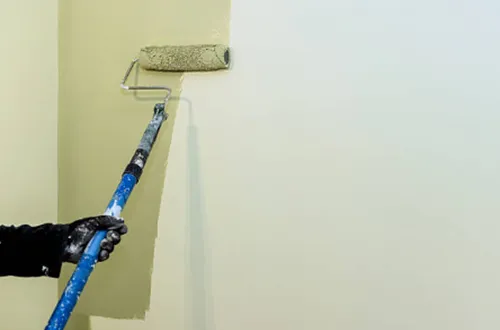
Film-Forming Aid for Eco-Friendly Interior Latex Paints
As consumer demand for indoor air quality rises, low-VOC (volatile organic compound) and even zero-VOC interior paints have become mainstream. PVA plays a central role in such products—it contains no organic solvents, fully aligning with environmental requirements, while also helping to uniformly disperse pigments and fillers and preventing sedimentation.
When added to latex paints, PVA forms a protective layer around pigment particles, ensuring stable suspension during storage through both steric hindrance and electrostatic repulsion. During application, PVA promotes uniform film formation, resulting in a denser, smoother coating that significantly improves scrub resistance.
Enhancing Film Hardness and Adhesion
The hydroxyl groups on the PVA chain can form chemical adsorption and hydrogen bonds with active groups on substrates such as cement, plaster, and wood, creating a strong bond at the interface. Experimental data show that under the same formulation conditions, paints containing an appropriate amount of PVA can achieve 30–50% higher adhesion compared to those without,
which is critical for preventing peeling and flaking.
PVA in Architectural Waterproofing Coatings Application
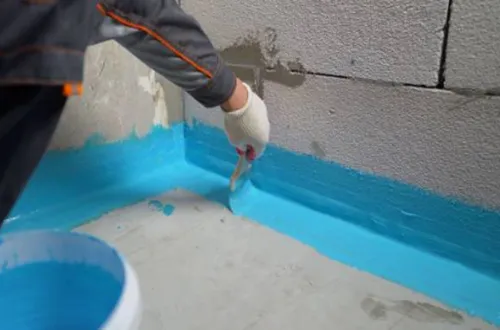
Waterproofing is a major application area for coatings, and PVA‑modified waterproofing materials have gained significant attention. By compounding PVA with cement, fine aggregates, and other functional additives, a polymer‑modified cementitious (JS) waterproof coating can be produced that combines both rigidity and flexibility.
In this system, the PVA solution interacts with cement hydration products to form an interpenetrating network. This structure maintains the excellent durability and breathability of cement-based materials while imparting flexibility through the PVA chains, enabling the coating to bridge fine cracks in the substrate. Compared with traditional waterproofing materials, PVA‑modified coatings offer easy application, strong adhesion, and non‑toxic properties, making them ideal for wet areas such as bathrooms, kitchens, and basements.
PVA in Industrial and Specialty Coatings
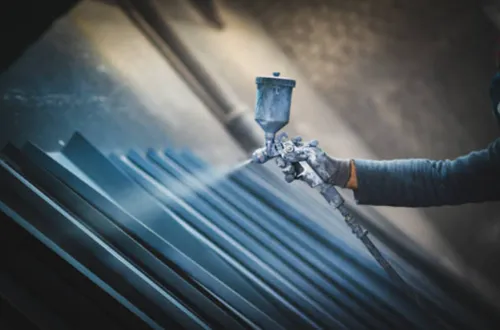
Temporary Protective Coatings
During metal processing, glass transportation, and electronic component manufacturing, temporary protective coatings play a critical role. PVA‑based strippable coatings are ideal for such applications—they form a tough protective film on the substrate surface that effectively prevents scratches, contamination, and corrosion. After processing or transport, the film can be easily
removed by washing or direct peeling, leaving no residue on the substrate.
A key advantage of these PVA temporary coatings lies in their water solubility: when the protection task is complete, the waste coating can be dissolved in water, enabling zero‑discharge disposal and aligning with modern green manufacturing principles.
Anti‑Fog Coatings
The hydrophilic nature of PVA also makes it valuable in anti‑fog coatings. By incorporating PVA into the formulation, a uniform hydrophilic layer is formed on the film surface, preventing water vapor from condensing into large droplets that scatter light. This technology maintains clarity on transparent substrates such as automotive glass, optical lenses, and agricultural greenhouse films. The hydrophilic surface ensures that condensation forms a continuous water sheet that does not obscure vision.
PVA in Putties and Adhesives
PVA also plays an important role in surface preparation. Adding PVA powder to interior wall putties significantly improves workability and adhesion. Specifically, PVA can:
Enhance smoothness during application, reducing drag and ensuring a leveler surface. Increase bonding strength, ensuring strong adhesion between the putty layer, substrate, and topcoat. Reduce cracking risk, using the bridging effect of polymer chains to effectively suppress micro‑cracks caused by drying shrinkage.
Additionally, PVA is a core raw material in water‑based adhesives such as white glue (PVAc). Compared with conventional adhesives, PVA‑based adhesives offer good initial tack, fast drying speed, and environmental friendliness, making them widely used in woodworking, packaging, and wallpaper applications.
PVA Drives Green Transformation in the Coatings Industry
Against the backdrop of carbon neutrality goals and tightening environmental regulations, the coatings industry is accelerating its shift toward waterborne, high‑solids, and solvent‑free systems. As a completely water‑soluble and biodegradable polymer, PVA’s value is becoming increasingly evident:
- Non‑toxic and safe: PVA is non‑irritating and non‑sensitizing, meeting standards for food‑contact materials.
- Biodegradability: In activated sludge environments, PVA can be broken down by specific microorganisms into carbon dioxide and water, contributing no microplastic pollution.
- Resource efficiency: Using PVA can partially replace petroleum‑based synthetic resins, reducing dependence on fossil resources.
Future Outlook for PVA in Coatings
With advances in materials science, the application of PVA in coatings continues to expand and deepen. Current research hotspots include:
Nanocomposite modification: Combining PVA with nano‑silica, nano‑montmorillonite, and other nanomaterials to further enhance mechanical properties and barrier performance.
Crosslinking modification: Using environmentally friendly crosslinkers to improve the water resistance and weatherability of PVA films, overcoming the inherent water sensitivity of conventional PVA.
Smart functional coatings: Leveraging PVA’s sensitivity to environmental factors such as humidity and pH to develop intelligent responsive coatings.
Conclusion
From interior latex paints to waterproofing coatings, from temporary protection to functional finishes, PVA—thanks to its unique molecular structure and outstanding overall performance—has become an indispensable raw material in modern coating formulations.
With ongoing technological innovation and increasingly stringent environmental requirements, the application of PVA in coatings field is set to become even broader and deeper, contributing significantly to building healthy, safe, and sustainable living environments.