pva knowledge
What Does PVA Viscosity Mean?
Why Is Viscosity a Key Question When Buying PVA?
When purchasing polyvinyl alcohol (PVA), viscosity is one of the first technical properties that buyers ask about. Whether PVA is used in adhesives, construction mortars, textile sizing, coating, surface sizing, or spraying systems, viscosity can affect solution flow, processing behavior, and the performance of the finished product.
However, “higher viscosity means a better product” is not a rule that can be applied universally. PVA viscosity generally reflects differences in polymer chain length and degree of polymerization, but it cannot independently determine adhesion, dissolution speed, film formation, or formulation compatibility. For procurement teams and formulation engineers, the real objective is not simply to choose a high- or low-viscosity grade. It is to select a viscosity level that matches the application process, solids content, application method, and required performance.
This guide explains PVA viscosity from four practical perspectives: what viscosity means, how viscosity relates to adhesion, how to select viscosity for different applications, and why products labeled PVA 1788 can show noticeably different viscosity values from different manufacturers.
What Is PVA Viscosity?
A Simple Way to Understand Viscosity
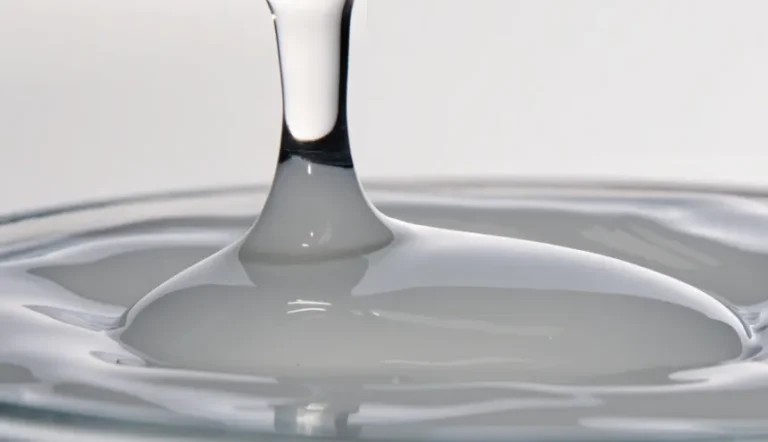
Viscosity can be understood as a liquid’s resistance to flow. Honey flows slowly and may form strings, so it is commonly perceived as highly viscous. Water flows quickly and is perceived as low in viscosity.
PVA is normally supplied as a solid powder or granule. In practical applications, however, the term “PVA viscosity” usually refers to the viscosity of the aqueous solution formed after PVA is dissolved in water. Therefore, PVA viscosity is not determined by the powder’s appearance alone. It is closely related to solution concentration, test temperature, dissolution condition, and measuring equipment.
How Is the Viscosity of a PVA Solution Usually Expressed?
In industry discussions, PVA solution viscosity is generally reported as a value measured under a specified concentration and temperature. The source material refers to a value measured at a 4% concentration and 20°C, expressed in mPa·s.
When comparing two PVA products, it is not enough to compare numbers such as “12 mPa·s” or “30 mPa·s.” You should also confirm whether:
- the test solution concentration is the same;
- the test temperature is the same;
- the sample has been fully dissolved and conditioned;
- the viscometer model, spindle, and speed are the same; and
- the reported viscosity is a typical value, a control range, or an actual batch result.
If these conditions are different, the results may not be suitable for direct comparison, even when the product names and grades appear to be the same.
Degree of Polymerization Is a Major Factor Affecting PVA Viscosity
PVA viscosity is primarily related to the degree of polymerization. In general, a higher degree of polymerization means longer polymer chains and a higher molecular weight. The resulting increase in chain entanglement and flow resistance usually leads to higher solution viscosity.
Degree of hydrolysis also affects PVA’s dissolution behavior and solution properties. However, according to the source material, its influence on viscosity is generally smaller than that of the degree of polymerization. When evaluating PVA viscosity, buyers should therefore review polymerization and molecular-weight information first, then consider degree of hydrolysis, particle size, dissolution conditions, and batch consistency.
Does Higher PVA Viscosity Mean Stronger Adhesion?
Within a Certain Range, Higher Viscosity May Support Adhesion
When the formulation and test conditions are comparable, increasing the degree of polymerization can strengthen polymer-chain entanglement and improve the continuous film formed after drying. As a result, a higher-viscosity PVA may help improve bond strength, film strength, and internal cohesion within a certain range.
This is why many buyers assume that “higher viscosity means stronger adhesion.” However, the relationship is not infinitely linear and cannot be evaluated independently of the application conditions.
Beyond the Suitable Range, Higher Viscosity Can Create New Problems
When PVA viscosity exceeds the suitable range for a formulation or piece of equipment, adhesion may not continue to improve significantly. Instead, the following problems may appear:
- Longer dissolution time: Longer polymer chains and a thicker solution may slow the process of water penetration and chain expansion.
- Lower solution flowability: The solution may become more difficult to pump, filter, coat, spray, or spread uniformly.
- Reduced penetration: A highly viscous solution may penetrate pores or gaps between fibers less effectively.
- More difficult processing: Stringing, poor leveling, and uneven coating thickness may occur.
- A narrower formulation window: At the same solids content, the system may thicken more easily and become more difficult to adjust.
For this reason, the goal of PVA selection should not be to obtain the highest possible viscosity. The objective is to match viscosity with the required adhesion, flowability, penetration, film formation, and processing method.
What Other Factors Affect PVA Adhesion?
The final bonding performance of PVA is usually determined by several factors rather than viscosity alone. Important considerations include:
- Degree of hydrolysis: Influences hydrophilicity, dissolution behavior, and compatibility with other components.
- Degree of polymerization and molecular-weight distribution: Affect solution viscosity, chain entanglement, and film structure.
- Crystallinity: May affect film strength, hardness, and water-related performance.
- Interfacial compatibility: Determines how well PVA bonds with paper, fibers, inorganic powders, wood, or other substrates.
- Formulation solids content: The same PVA can show different viscosity and adhesion behavior at different solids contents.
- Dissolution and dispersion state: Undissolved particles or gel-like material can affect processing and test results.
- Drying and film-formation conditions: Temperature, humidity, and drying rate can influence the quality of the final film.
Therefore, the most reliable way to determine whether a PVA grade is suitable for an adhesive or coating system is to combine basic specification review with application testing rather than ranking products by viscosity alone.
How Should PVA Viscosity Be Selected for Different Applications?
The viscosity ranges below are carried over from the source material and should be treated as preliminary selection references. Grade definitions and test methods may differ between manufacturers. Final selection should be based on the supplier’s TDS, COA, and actual formulation tests.
Low Viscosity PVA
The source material gives a low viscosity PVA reference range of 3.5–12.0 mPa·s.
This type of PVA may be considered for applications that place a high priority on flowability, such as:
- coating;
- surface sizing;
- spraying;
- systems requiring rapid spreading or good penetration; and
- formulations that are sensitive to pumpability or nozzle passage.
Low viscosity does not necessarily mean weak adhesion. It generally means that the PVA can form a more mobile solution. In thin coating, paper surface treatment, and spraying applications, excessive viscosity may reduce coating uniformity and production efficiency.
Medium Viscosity PVA
The source material gives a medium viscosity PVA reference range of 13.0–40.0 mPa·s.
This range can serve as a general starting direction for applications such as:
- general-purpose adhesives;
- construction mortars;
- textile sizing;
- formulations requiring both adhesion and workable flow; and
- systems that need a balance between storage stability and processing performance.
When the buyer has not yet finalized a specific grade, a medium-viscosity product may be used as an initial screening option. It should still be validated against the target solids content, mixing equipment, application method, and end-use performance requirements.
High Viscosity PVA
The source material gives a high viscosity PVA reference range of 40.0–100.0 mPa·s.
These grades may be considered for applications requiring stronger film formation, thickening, or high-performance bonding, including:
- high-performance tile adhesives and related construction bonding systems;
- strong adhesives;
- formulations that require increased viscosity; and
- customized applications that place high demands on film strength and internal cohesion.
High-viscosity PVA requires particularly careful application testing. As viscosity increases, buyers should pay closer attention to dissolution equipment, addition sequence, mixing shear, filtration, pumping, and final workability. A product should not be selected solely because it carries a “high-viscosity” label.
Why Can PVA 1788 Show Different Viscosities from Different Manufacturers?
A common procurement question is why products labeled “PVA 1788” do not always show the same viscosity. The source material notes that the difference may even reach 20%. This does not automatically mean that one product is unacceptable. First, buyers should confirm whether the grade definitions and test conditions are genuinely comparable.
Reason 1: Differences in Polymerization Degree and Its Distribution
“1788” is generally used to describe a product in a particular degree-of-hydrolysis direction, but the grade name may not fully describe every aspect of the product’s molecular structure. Differences in polymerization process, raw-material control, and product classification may lead to differences in:
- average degree of polymerization;
- breadth of molecular-weight distribution;
- the ratio of high- and low-molecular-weight chains; and
- the degree of chain entanglement in solution.
These differences can affect both the final aqueous-solution viscosity and processing performance.
Reason 2: Differences in Dissolution and Sample-Preparation Procedures
PVA viscosity testing requires preparation of an aqueous solution. If dissolution temperature, holding time, mixing intensity, conditioning time, or filtration differs, the samples may not reach the same dissolution state.
For example, incompletely dissolved particles or gel-like material may affect test stability. Different conditioning times may also change the extent to which polymer chains expand in solution. Laboratory sample-preparation procedures should therefore be standardized as much as possible before products are compared.
Reason 3: Non-Uniform Test Conditions
The same PVA solution can produce different viscosity results under different test conditions. Buyers should verify:
- solution concentration;
- test temperature;
- viscometer brand and model;
- spindle specification;
- rotational speed;
- testing time; and
- sampling position and whether the sample was fully mixed.
When comparing PVA 1788, do not rely on a single number shown on a supplier quotation. A more reliable approach is to request the test method, typical value, or control range and then retest the samples in the same laboratory or under the same procedure.
What Else Should Buyers Check Besides PVA Viscosity?
Is the Degree of Hydrolysis Suitable for the Formulation?
Degree of hydrolysis affects PVA hydrophilicity, dissolution behavior, crystallinity tendency, and compatibility with other raw materials. Even when two products have similar viscosity, different degrees of hydrolysis can lead to different formulation performance.
Is the Viscosity Test Method Clearly Defined?
When a supplier provides viscosity data, confirm the test concentration, temperature, equipment, and sample-preparation method. A viscosity value without test conditions has limited value for procurement comparison.
Is Batch Consistency Reliable?
For adhesives, mortars, or coating products manufactured continuously, one conforming batch does not prove long-term consistency. Buyers should review COAs from multiple batches, historical test data, and repeat laboratory-trial results.
What Are the Dissolution Speed and Solution Appearance?
In production, ease of dissolution, the presence or absence of fish-eyes or gel particles, and solution clarity and uniformity can be just as important as viscosity. High-viscosity products especially require early verification of equipment and process conditions.
Is the Product Compatible with the Existing Formulation and Equipment?
Two PVAs with similar viscosity may behave differently with different substrates, additive systems, and equipment. Before purchasing, it is better to ask the supplier to recommend a grade based on the final application and to arrange a sample trial rather than replacing a product solely by grade name.
FAQ
Is higher PVA viscosity always better?
No. Higher viscosity may support thickening, film formation, and internal cohesion, but it may also reduce dissolution speed, flowability, penetration, and processing convenience. The correct grade depends on the application and formulation objectives.
What is the relationship between PVA viscosity and adhesion?
Within a certain range, higher degree of polymerization and viscosity may help improve bond strength. However, adhesion is also affected by degree of hydrolysis, crystallinity, interfacial compatibility, solids content, substrate type, and drying conditions. Viscosity alone cannot determine product quality.
Why do different manufacturers report different viscosities for PVA 1788?
The difference may result from variations in polymerization-degree distribution, molecular-weight distribution, dissolution procedures, sample preparation, and test conditions. Concentration, temperature, equipment, and testing procedures must be standardized before comparison.
What applications are suitable for low-viscosity PVA?
Based on the reference range in the source material, low-viscosity PVA at 3.5–12 mPa·s may be considered for coating, surface sizing, spraying, and other applications that prioritize flowability. Final selection should still be confirmed through formulation testing.
What applications are suitable for medium-viscosity PVA?
Based on the reference range in the source material, medium-viscosity PVA at 13.0–40.0 mPa·s may serve as a general selection direction for adhesives, construction mortars, and textile sizing. The exact grade should be confirmed through application testing.
What applications are suitable for high-viscosity PVA?
Based on the reference range in the source material, high-viscosity PVA at 40–1000 mPa·s may be considered for thickening, stronger film formation, high-performance bonding, and customized applications. Dissolution, pumping, filtration, and workability should be tested before use.
Conclusion
PVA viscosity is an important specification, but it is not the only answer when evaluating product quality. Viscosity generally reflects differences in polymerization degree and molecular-chain structure, while also affecting dissolution speed, flowability, penetration, film formation, and processability.
A more scientific PVA selection method is to define the application first, set the required flow and bonding targets, and then evaluate degree of hydrolysis, viscosity, dissolution procedure, batch consistency, and formulation compatibility together. For common grades such as PVA 1788, buyers should not rely on one viscosity value. Test conditions should be standardized, and product suitability should be confirmed through TDS, COA, and actual laboratory trials.
In short, the best PVA is not necessarily the one with the highest viscosity; it is the one that best matches the application. This is the central principle to remember when purchasing and formulating with PVA.