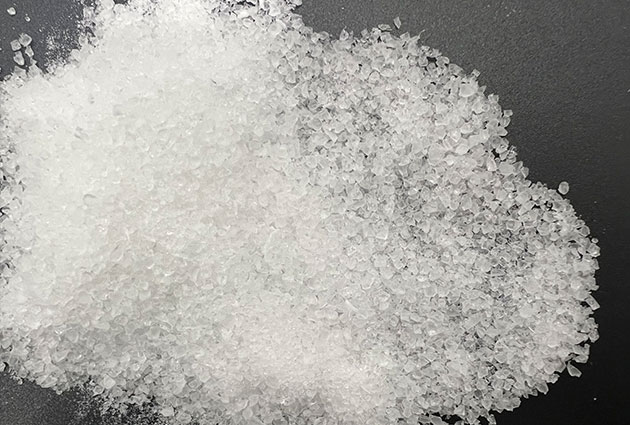
Description
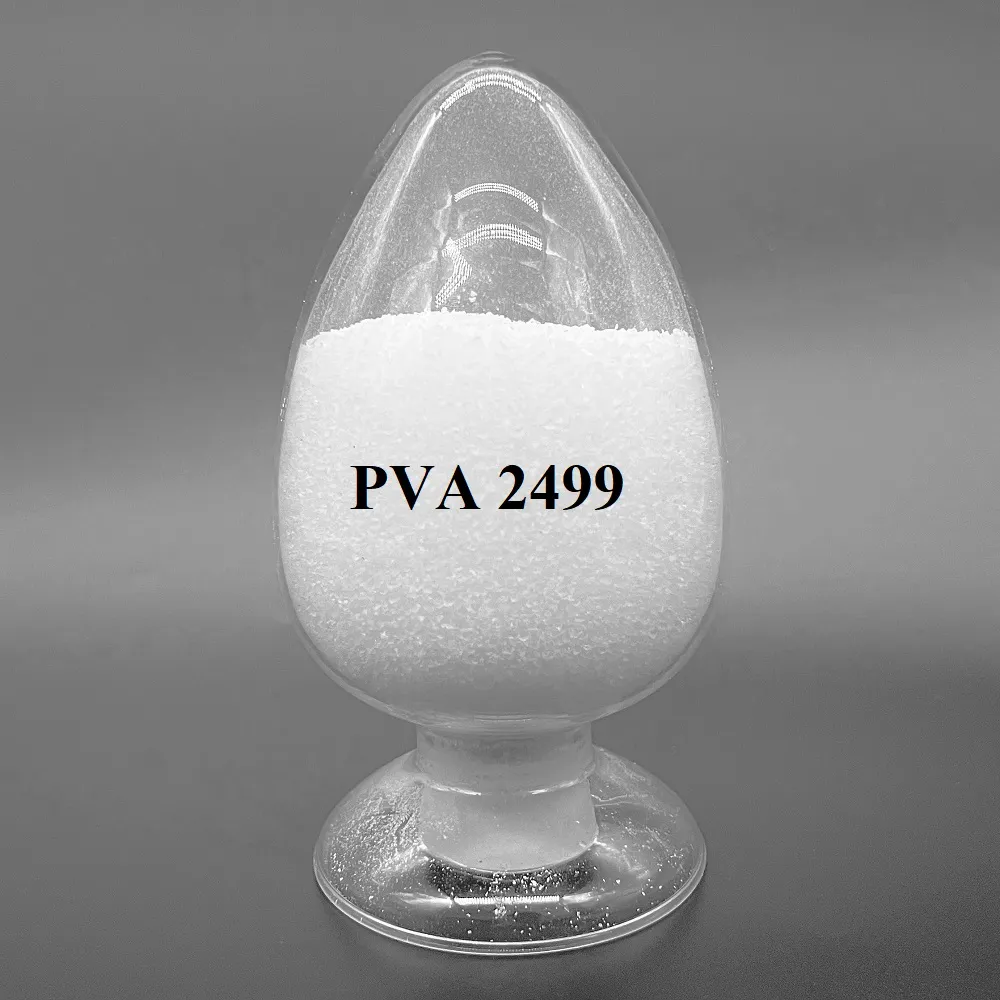
PVA 2499 Technical Parameters
|
ITEM
|
UNIT
|
SPECIFICATION
|
|
Viscosity |
cps
|
48.0-60.0 |
|
Hydrolysis |
mol %
|
98.0-100.0
|
|
Volatile |
wt %
|
7.0 Max
|
|
Ash
|
wt %
|
0.7Max
|
|
pH Value |
—
|
5.0-7.0 |
PVA 2499 Application
PVA 2499 is a high viscosity, fully hydrolyzed polyvinyl alcohol product with high molecular weight, excellent film-forming rigidity, super strong adhesion, and outstanding water resistance. Widely used in the following industries:
Used for high viscosity adhesive
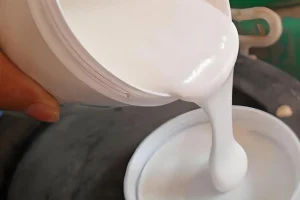
PVA 2499 is the core raw material for manufacturing high-viscosity, high-performance adhesives. Its polymer structure provides a strong thickening effect, excellent initial adhesion, and high final adhesive strength. It forms a tough, transparent, and durable adhesive film with good water and aging resistance, making it well-suited for wood bonding, paper composites, packaging adhesives, and high-viscosity structural water-based adhesive systems.
Used for advanced architectural and industrial coatings
As a premium additive for high-quality coatings and coating products, it has excellent thickening, anti-settling, and leveling properties. It effectively stabilizes pigment dispersion, improves coating uniformity and workability, and avoids delamination and precipitation. After curing, it significantly improves the coating’s hardness, wear resistance, water resistance, and weather resistance, thereby greatly enhancing the surface smoothness and overall quality of high-end coatings.
Used for textile sizing
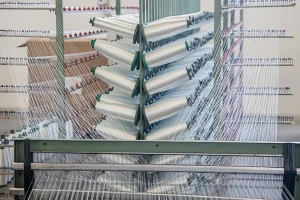
PVA 2499 has excellent film-forming toughness and strong yarn adhesion, making it an ideal choice for sizing high-count, high-density yarns. It forms a dense, smooth, and wear-resistant protective film on the yarn surface, effectively improving its tensile strength and wear resistance. It has stable sizing performance and easy desizing characteristics.
Used for high-performance building materials
Used as a functional modifier for high-standard dry mortar, wall putty, and architectural coatings. It has excellent water retention, thickening, and crack resistance properties, improving construction and substrate adhesion strength. Optimized the compactness and durability of building materials, avoiding peeling, hollowing, and drying shrinkage cracking.