
pva knowledge
PVA Procurement Guide for Textile Industry
On a textile mill’s procurement list, PVA (polyvinyl alcohol) is an important raw material. However, many purchasers focus only on price and brand, neglecting critical quality indicators.
The result? The same PVA model from different batches gives vastly different sizing effects – unstable viscosity, insufficient film strength, difficult desizing… These problems affect production efficiency and product quality, and add hidden costs.
So, when purchasing PVA for the textile industry, what key indicators should you truly focus on?
The Five Core Indicators for Textile Sizing PVA
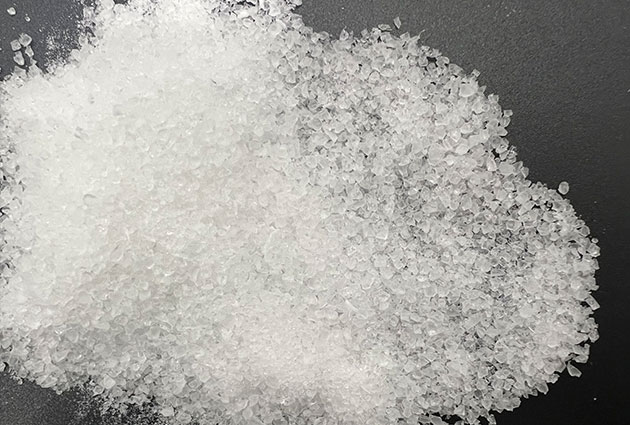
Hydrolysis Degree
First – Hydrolysis Degree (DH): the most critical “primary indicator”.
PVA hydrolysis degree is the molar percentage of acetate groups replaced by hydroxyl groups. In sizing, DH determines water solubility and film performance. Fully hydrolysed (≥99%, e.g., PVA 1799) gives hard, water resistant, high strength films; partially hydrolysed (86%–90%, e.g., PVA 1788/PVA 0588) gives good water solubility and flexible films.
Procurement control: common DH ranges for textile sizing are 88% and 99%; fluctuations should be within ±1%, otherwise size performance becomes unstable; for type 1799, DH should be 98%–99%.
Viscosity
Second – Viscosity: determines size fluidity and penetration.
Viscosity is the thickness of the PVA aqueous solution, expressed in mPa·s. In sizing, viscosity directly affects the balance between penetration and coverage: too high – poor penetration, film sits on the surface, splitting difficult; too low – insufficient coverage, poor abrasion resistance.
Typical viscosity ranges (4% solution, 20°C): PVA 1788 20.0–26.5 mPa·s; PVA 1799 25–35 mPa·s; PVA 2488 44.0–52.0 mPa·s. Procurement control: require batch by batch viscosity test reports; fluctuations within ±2 mPa·s; though formulations may be adjusted seasonally, raw material viscosity must remain stable.
Ash Content
Third – Ash Content: the “hidden killer” affecting size purity. Ash is the inorganic residue after igniting a PVA sample at high temperature. In sizing, ash mainly comes from residual catalysts and auxiliaries. High ash leads to: insoluble particles clogging pipes and nozzles; impurities in the film affecting integrity; and higher inorganic content in desizing effluent, increasing treatment difficulty.
Procurement control: high quality industrial PVA should have ash ≤0.5%; both 1799 and 1788 should be ≤0.5%; request ash data from the supplier.
Volatile Content
Fourth – Volatile Content: affects active ingredient level. Volatile content is the mass lost after drying PVA at 105°C for 2 hours. In sizing, it mainly contains moisture and low boiling organics. Too high volatile content means lower effective solids, requiring adjustment of dosage; fluctuations affect precise concentration control. Industrial PVA generally requires volatiles between 5% and 8%, with batch to batch fluctuations within ±1%.
Polymerisation Degree
Fifth – Polymerisation Degree (DP): determines molecular size. DP is the number of repeating units. In sizing, DP determines molecular weight, affecting viscosity and film strength – higher DP gives stronger films. Procurement control: for 1788 and 1799, DP should be 1650–1850, with fluctuations within ±100.
How to Verify a Batch of PVA
Use a “four step method”.
Step 1–visual inspection: colour should be white or slightly yellowish, uniform; form as flakes, powder, or granules, without lumps or impurities. Yellowing suggests heat ageing; lumps suggest moisture.
Step 2–solubility test: prepare a solution at standard concentration and observe dissolution. Type 1799 should dissolve completely in hot water above 85°C to a clear solution; type 1788 should dissolve rapidly in cold water. Insolubles or turbidity indicate quality issues.
Step 3–viscosity check: measure at 4% concentration and 20°C with a rotational viscometer, compare with the supplier’s report – deviation should be within tolerance.
Step 4–trial sizing with a small sample: before bulk use, run a small scale sizing test and compare sized yarn strength, abrasion, hairiness, etc.
For supplier selection: demand a complete Certificate of Analysis (COA) covering all the above indicators; choose reputable large manufacturers with stable processes to minimise batch to batch variation; establish a supplier rating system and evaluate regularly; and most importantly – do not focus only on price. Saving a few hundred yuan per ton is meaningless if quality fluctuations scrap an entire batch of yarn.
Conclusion
Procuring PVA may seem simple, but it involves deep knowledge. The five indicators – viscosity, hydrolysis degree, ash content, volatile content, and polymerisation degree – each directly affect sizing results and production stability. As the bridge between procurement and technical staff, understanding these indicators and their control points helps you make the best trade off between price and quality.