
pva knowledge
What is PVA and its applications in the textile industry?
PVA is a highly versatile and widely used water-soluble synthetic polymer. PVA typically appears as white granules, powder, or floccules. The most important property of PVA is its water solubility, which can be precisely regulated by adjusting its degree of polymerization and degree of hydrolysis. Another key property of PVA is its adhesiveness, which exhibits particularly strong adhesion to porous materials such as textiles and paper.
This article focuses on the commonly used types of PVA in textile sizing and their characteristics.
PVA Market Overview
China is the world’s largest producer of PVA. Currently, the domestic PVA market maintains stable operation, with domestic price fluctuations serving as a benchmark for the Asian market. Domestic capacity is mainly concentrated in leading enterprises such as Anhui Wanwei and Ningxia Dadi, whose operating rates and pricing strategies have a significant impact on the market.
Around 14% of global PVA consumption is used for textile sizing, compared with approximately 20% of domestic consumption in China. The emerging application of PVA fibers, as materials for water-soluble fibers and high-strength, high-modulus fibers, can be used in industries such as ropes and cables, aquaculture, and rubber, aligning with environmental trends.The global PVA fiber market is growing at a compound annual growth rate (CAGR) of about 4.4%.
How to choose PVA in the textile field?
In the textile field, the applications of PVA are mainly divided into two types. One is as a functional fiber: hydrolyzed fibers are used in products such as non-twisted towels, lace, and mesh, while high-strength, high-modulus fibers are used in products such as cut-resistant gloves and safety protective clothing.
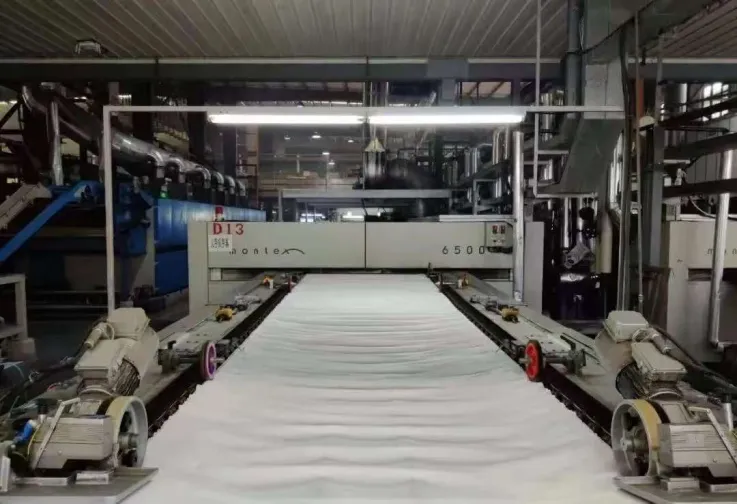
The other application is textile sizing, which is currently the main application of PVA in the textile sector. Not all PVA is suitable for textile sizing; the choice must be based on the type of yarn and weaving process, with the key factors being the polymerization degree and alcoholysis degree characteristics of the PVA.
Degree of polymerization of PVA
The degree of polymerization determines the viscosity and film-forming strength of PVA. PVA with a high degree of polymerization has high viscosity and strong film-forming strength but poor slurry permeability and high fiber separation resistance; PVA with a low degree of polymerization has low viscosity, good slurry permeability, easier fiber separation, but lower film-forming strength.
Alcoholysis degree of PVA
The degree of alcoholysis determines PVA’s water solubility and its affinity for hydrophobic fibers. Fully alcoholized PVA has good water solubility but generally low adhesion to hydrophobic fibers and easily gels in cold water; partially alcoholized PVA has slightly lower water solubility but good adhesion to hydrophobic fibers and strong anti-gelling properties.
How to choose the PVA model?
Based on the characteristics described above, common PVA models can be selected in a targeted manner according to the yarn variety.The first two digits of the PVA model represent the degree of polymerization.
For example, in PVA1799, ’17’ indicates a polymerization degree of about 1700, which determines the viscosity and film-forming strength. The last two digits represent the degree of alcoholysis. For example, in PVA1799, ’99’ indicates an alcoholysis degree of about 99%, which determines the water solubility and adhesion of PVA.
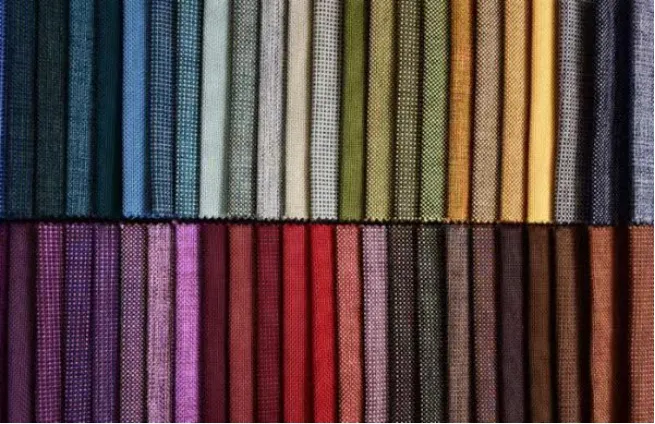
Common Fabrics and Recommended PVA Models
Pure cotton, modal, and rayon: PVA1792 is recommended
Silk, linen, and high-count high-density fabrics: PVA2488 is recommended
Pure synthetic fibers (e.g., polyester, nylon): PVA0588 is recommended
Polyester/cotton and polyester/viscose blended yarns: PVA1799 is recommended
High-grade yarn-dyed fabrics and denim: PVA1799 is recommended
Conclusion
Currently, to achieve better sizing quality and production efficiency, low-degree-of-polymerization PVA has become the mainstream.In actual production processes, PVA is usually mixed with modified starch and acrylic-based pastes in certain proportions to balance cost, sizing performance, and environmental requirements.