pva knowledge
Characteristics and main applications of PVA
Characteristics of PVA
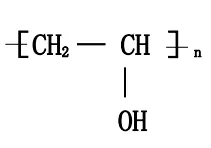
1.PVA structural formula
Filling density: 0.4-0.5 g/ml
2.Oil resistance and organic solvent resistance
Easily soluble in water; aqueous solutions are transparent. Its solubility is mainly determined by the degree of polymerization and alcoholysis. As the degree of alcoholysis decreases, the water solubility increases and the dissolution temperature decreases accordingly. The best water solubility occurs at 88% alcoholysis.
PVA is soluble in polar solutions containing hydroxyl groups (glycerin, ethylene glycol, acetic acid, acetaldehyde, etc.). Still, it gels easily and is insoluble in non-polar organic solvents and inorganic acids (H2SO4, HCl, etc.).
3.Film-forming properties
PVA aqueous solutions form films easily; the resulting films are colorless and transparent, possess good mechanical strength, and have a smooth, non-tacky surface. The films are permeable to water vapor but have very low permeability to gases such as hydrogen, oxygen, and carbon dioxide; changes in external temperature have little effect on the films.
4.Adhesive force
PVA aqueous solution can bond well with porous materials such as fibers, wood, and paper.
5.Miscibility
PVA is miscible with starch, gum, synthetic resin, cellulose derivatives, and various surfactants, and it is stable.
6.Chemical resistance
At room temperature, the pH of PVA aqueous solution is generally around 5-7; viscosity is stable and largely unaffected by weak acids, weak bases, or organic solvents (esters, ketones, higher alcohols, hydrocarbons). It has extremely high oil resistance, but can be depolymerized and decomposed by peroxides such as H2O2.
7.Heat resistance (thermal stability)
PVA softens when heated to 130-140 ℃, and its properties hardly change; only its color turns yellow. Heating at 160 ℃ for a long time will darken the color. At 200 ℃, intermolecular dehydration occurs, and water solubility decreases. At temperatures above 200 ℃, dehydration occurs within the molecule. As it approaches 300 ℃, it completely decomposes into water, acetic acid, acetaldehyde, and crotonaldehyde (with no adverse effects during the sizing and drying process).
8.Color rendering
PVA can form molecular adducts with dyes such as Congo red, iodine, copper hydroxide, boric acid, and salts. This property can be used to identify the degree of desizing and purification, as well as to distinguish PVA with different degrees of alcoholysis.
Differences in PVA properties are mainly determined by its degree of polymerization and degree of alcoholysis. For different degrees of alcoholysis of Chuanwei brand PVA, as the degree of alcoholysis decreases, viscosity slightly decreases, film strength decreases, elongation increases, and adhesion to hydrophobic fibers is enhanced.
9.Storage stability of PVA aqueous solution
Compared with other water-soluble polymers such as CMC, PVA is a low-viscosity polymer, and its dilute aqueous solution is very stable at room temperature. PVA aqueous solution does not denature during storage; although concentrated alcoholysis PVA solution converts to a gel at a lower temperature, it easily returns to solution when heated.
10.Non-toxicity
Pure PVA is non-toxic and can be used as an adhesive for cosmetics and food packaging. It is completely harmless when in contact with the skin.
Application of PVA
1.PVA is used in the textile industry
1.1 PVA is used in Textile warp yarn slurry
The purpose of warp sizing is to improve the weaveability of warp yarns, reduce warp yarn breakage, pilling, and increased flying caused by intense movements such as warp yarn friction, bending, and stretching during the weaving process, improve warp yarn efficiency, and increase yield.
Therefore, most yarns must rely on pulp to provide sufficient strength, elasticity, friction resistance, and grip force for smooth manufacturing. PVA is currently the most efficient synthetic sizing agent for polyvinyl alcohol warp sizing. Its main advantages are as follows:
- PVA film has excellent strength, toughness, smoothness, wear resistance, and adhesion to fibers. It has a low sizing rate and good effect, and can be adjusted for weaving high fine-count yarns and high-density, high-end textiles.
- PVA has a strong holding force and excellent protection for fibers, which can reduce the number of yarn breaks during weaving and improve weaving efficiency.
- PVA slurry is not prone to spoilage and deterioration, and its viscosity will not change after prolonged heating. Therefore, the sizing rate is controlled stably, and slurry spots are less likely to occur.
- The humidity of textile factories using starch slurry needs to be maintained at 80%~85%. When using PVA slurry, a humidity of 70%~75% is most suitable, which can improve the operating environment and increase work efficiency.
- Reduce the phenomenon of delamination during sizing and weaving processes, and maintain the cleanliness of the factory.
- PVA reduction only requires hot water or a small amount of oxidizing desizing agent. After desizing, the BOD and COD of the wastewater are low, making wastewater treatment easy.
The selection of sizing agent is key to sizing quality. It is mainly adjusted based on factors such as warp yarn composition, warp yarn count, twist, yarn quality, fabric composition, type of sizing machine, weaving machine form, speed, and factory temperature and humidity.
1.2 PVA is used in Vinylon raw materials
PVA1799F is mainly used as a raw material for vinylon fibers. The short fibers and stretch cut yarns produced with PVA17-99F have the advantages of white color, high strength, good moisture absorption, wear resistance, sun resistance, corrosion resistance, etc. They can be blended or spun with cotton, wool, and viscose fibers. Widely used in industries such as clothing, tarpaulin, cord, fishing nets, ropes, etc., it is also an ideal substitute for asbestos fiber.
1.3 PVA is used in Fiber Processing
PVA can be widely used for warp sizing and fabric finishing. PVA is mainly used to prepare the slurry, which is easy to prepare, stable, and does not corrode or deteriorate. It adheres well to cotton, linen, polyester, vinylon, and viscose fibers. The slurry film is smooth and strong, which can increase yarn strength, reduce yarn breakage, reduce dosage, and facilitate desizing.
In practice, different grades of PVA should be selected based on fiber characteristics, yarn count, and yarn blending ratios. Starch, carboxymethyl cellulose (CMC), or other sizing agents should be mixed in different proportions, and appropriate sizing aids should be added to achieve satisfactory sizing effects, improve weaving efficiency, and fabric quality.
PVA has a wide variety, low impurities, high purity, good transparency, and stable viscosity, meeting the sizing needs of different fibers.
PVA aqueous solution can be used as a fabric finishing agent, often mixed with urea and formaldehyde. After high-temperature baking, it can improve fabric stiffness and elasticity.
2.PVA is used in the paper industry
Polyvinyl alcohol has superior adhesion to cellulose compared to casein and other materials, with strong film-forming properties and good film strength. Therefore, polyvinyl alcohol has a relatively large processing capacity for paper.
2.1 PVA is used in Paper Adhesive
PVA is a highly efficient paper adhesive that requires low dosage and provides strong adhesion. Fully alcoholized PVA is water-resistant and can be adjusted into a transparent, water-resistant slurry for use. After PVA is mixed into a slurry, its quality is stable; it does not mold or spoil, and after drying, it resists oil and organic solvents, making it suitable as a paper adhesive.
To reduce costs, white clay and talc powder can be added (the specific gravity should not be too high, for neutral or acidic substances, to avoid rapid layering). Adding white clay can also increase initial adhesion and reduce penetration into the paper layer.
2.2. PVA is used in Re-wettable Adhesives
Low-alcohol-degradation PVA can be used as a re-wettable adhesive. Depending on the requirements of the coating machinery and the properties of the finished product, different grades can be selected and formulated as needed. Compared to other rewet adhesives, PVA rewet adhesives are less sensitive to humidity, do not cause sheets of paper to stick together, do not require a backing paper, and maintain a stable adhesive layer over time without deteriorating or being damaged by insects, making them excellent rewet adhesives. Commonly used grades include PVA 17-88, 20-88, and 24-88.
2.3 PVA is used in Adhesive on the surface of paper products
Adhesive coating on the surface of paper products is currently the most widely used method in the paper industry. The traditional method mainly uses starch combined with chemical starch. Due to increasing demand for surface strength and printing adaptability in paper products, the main adhesive agent has gradually shifted to PVA or a combination of PVA and chemical starch. Using PVA adhesive can improve the characteristics of paper products as follows:
- Increase the surface strength of paper products to avoid shedding and powdering caused by high-speed printing.
- Increase the tensile strength, elongation, flexural strength, and abrasion resistance of paper products.
- To maintain the stability of paper size and avoid gluing the base paper, the phenomenon of paper curling occurs after single-sided coating processing.
- Enhance the gloss and smoothness of the paper surface.
- Has special resistance to oil, solvents, and organic solvents.
- Improve printing adaptability, as PVA has oil resistance, controlling the printing ink to penetrate the inner layer of the paper in an appropriate amount, making the printed product vivid and beautiful.
- Enable broad-leaved tree pulp to have the same tension and printing adaptability as coniferous tree pulp. Currently, coniferous tree pulp is lacking. If PVA is used for surface adhesive treatment of broad-leaved tree pulp paper products, the shortcomings of broad-leaved tree pulp can be fully improved.
- Enhance the water resistance of educational paper products, and use PVA with a polymerization degree of 1750 as the adhesive on the surface, unless otherwise specified. Using fully alcoholized PVA as adhesive on the surface of paper products can increase their wet strength. If combined with water-resistant agents such as formaldehyde and thermosetting resins, it can have excellent water resistance
3.PVA is used as a coating for the construction industry
Because PVA is a water-soluble polymer, it condenses with formaldehyde, catalyzed by hydrochloric acid, to form a thermoplastic polymer compound with good waterproofing, durability, and anti-corrosion properties. The coating does not expand or become brittle when exposed to water, and is inexpensive, easy to apply, non-toxic, and odorless. It has been widely used as a building coating in China.
3.1 PVA is used in Cement additives
PVA as a cement additive can effectively increase the adhesion and fluidity of cement, slow down the drying time of the cement surface, increase construction adaptability, and prevent cracking of the cement coating surface. Suitable for wall and ceiling decoration and tile bonding, with simple use and good effect.
Usage:
- First, pour the cement onto the mixing table, then evenly disperse the required amount of PVA micro powder, PVA17-88, 20-88, or 24-88 onto the cement, stir slightly, and then adjust the water for use.
- PVA20-88 has good adhesion and is suitable for tile bonding.
3.2. PVA is used in Adhesive for Forming Plates
Whether organic fibers (such as bagasse and sawdust) or inorganic materials, PVA’s high-efficiency adhesion and water resistance can be used to mix, compress, and bond them to produce gypsum prefabricated boards, sound-absorbing boards, and other panels. Use PVA24-9922-99, 20-99, 17-99, etc.
3.3 PVA is used in Coatings and building adhesives
PVA aqueous solution condenses with formaldehyde under the catalysis of hydrochloric acid to form water-resistant PVA formaldehyde polymer compounds, which are widely used as interior and exterior wall coatings, decorative processing, and joint filling in buildings. PVA coating has good weather resistance, waterproofing, non-swelling and non-brittleness when in contact with water, and low cost.
PVA formaldehyde polymer solution can also be used alone for concrete reinforcement, wall putty adhesive, and other applications, and is widely used in buildings and decoration. When used with polyacrylamide, it can meet the needs of different applications. Applicable PVA1799, 2099, 2299, 2499, 2699, etc.
4.PVA is used for adhesives
PVA has very strong adhesion to cellulose (paper, cloth, wood), with characteristics such as non-spoilage and stable quality. It can replace starch or water glass, or be used in combination with them, and is therefore widely used in industries such as printing, binding, and paper processing.
Taking advantage of PVA’s unique water solubility, it can also be used as a rewetting adhesive for the stamp, label, wallpaper, and packaging industries.
PVA-modified urea-formaldehyde resin and phenolic resin can be used as adhesives for laminates or artificial boards. This adhesive has good weather resistance, fast curing, and long-term storage without decreasing adhesive strength.
5.PVA Acetal
PVA and aldehydes can be modified by acetalization to improve their water resistance and adhesion, resulting in a series of important products.
6.PVA formaldehyde (PVF)
Widely used in China for building coatings and building adhesives, and can also be used in the production of metal adhesives and in the formulation of wire insulation paints.
7.PVA butyraldehyde (PVB)
Has good flexibility, strong adhesion, and good film-forming properties. Widely used for bonding metals, wood, leather, glass, fibers, ceramics, etc.
8.PVA is used as an emulsion stabilizer and dispersant
PVA is widely used as an emulsion stabilizer in the production of polyvinyl acetate lotion by polymerization of vinyl acetate and PVC by suspension polymerization of vinyl chloride. Generally speaking, the water resistance of lotion can be improved by using PVA17-88 as an emulsifier. In addition, as a building waterproofing material, asphalt latex can also be stabilized with PVA.
9.PVA film
PVA film has the advantages of good transparency, no static electricity, strong and flexible film, oil resistance, solvent resistance, low oxygen permeability, high moisture permeability, good printability, and non-toxicity, which cannot be compared with general polyethylene, polypropylene, polyvinyl chloride, and other films.
10.PVA sponge and grinding wheel sandpaper
10.1 PVA is used in PVA sponge
By adding pore-forming agents (such as starch, foaming agents, etc.) to PVA and moderately reducing formaldehyde, PVA sponge with special properties can be produced for filter materials, makeup powder puffs, household wiping utensils, industrial rollers, etc. It has solvent resistance, good elasticity, softness, and a good feel on the skin after absorbing water. Suitable for PVA1799, 1797, 1599, etc.
10.2 PVA is used in Grinding wheel
The PVA grinding wheel is elastic and flexible, making it suitable for polishing metal surfaces.
Production method:
(1) Roughly similar to the PVA sponge production method, but the pore-forming agent needs to be changed to gold steel sand.
(2) If high hardness is required, it still needs to be compatible with thermosetting resin
Suitable for PVA26-99, 24-99, 20-99, 17-99, etc
(3) Grind sandpaper and sanding cloth.
PVA combined with thermosetting resin can be used as an adhesive for sandpaper.
Suitable for PVA26-99, 24-99, 20-99, 17-99, etc.
11.PVA is used in others
PVA can also be used as PVA rubber, a soil amendment, cosmetics, a protective film, a high-frequency quenching agent, a photosensitive material, etc.